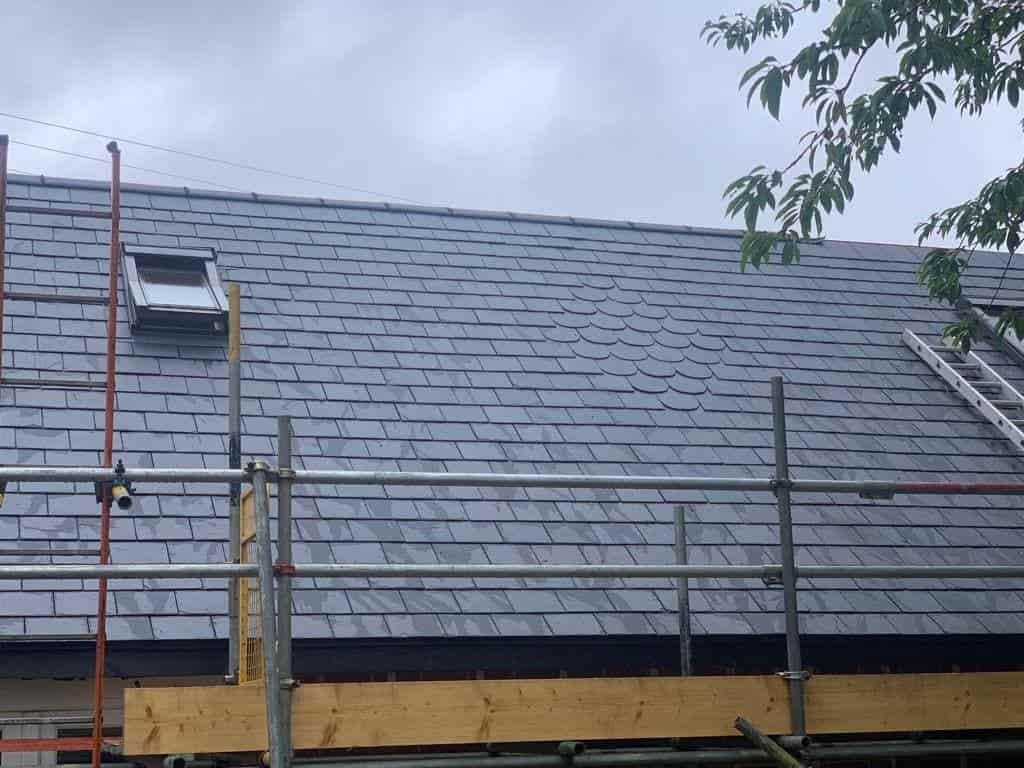
When water appears inside a property, damaged or missing roof tiles may seem like the obvious cause. Replacing the nearest tile can sometimes resolve the problem, but leaks frequently originate from another part of the roofing system.
Water can enter through flashing, valleys, roof junctions or damaged underlay before travelling along timbers and internal surfaces. The damp patch inside the property may therefore appear some distance from the actual defect. Investigating the leak before replacing tiles helps ensure that the work addresses its source rather than only the most visible symptom.
Why Roof Leak Diagnosis Should Come Before Tile Replacement
A tiled roof relies on several components working together. Tiles form the main outer covering, but underlay, battens, flashing, mortar, valleys and drainage details all contribute to weather resistance.
A professional investigation should consider:
- Where the internal dampness appears
- When the leak occurs
- The direction and duration of rainfall
- The condition and alignment of nearby tiles
- Chimneys, valleys and adjoining walls
- Lead flashing and roof penetrations
- Underlay and battens
- Gutters and drainage routes
- Previous repairs in the affected area
This broader approach reduces the risk of replacing sound tiles while leaving the real defect untreated.
The Internal Damp Patch May Not Identify the Entry Point
Once water passes beneath the roof covering, it can travel along underlay, rafters, battens or other surfaces. Gravity may carry it down the roof slope before it drips onto the ceiling.
The stain visible inside the property can therefore be misleading. A damp patch near one row of tiles does not necessarily mean that the water entered directly above it.
Professional leak detection works backwards from the internal symptoms while examining the external roof for potential entry points.
Roof Tiles May Appear Damaged Without Causing the Leak
A weathered, chipped or discoloured tile can attract attention during a visual inspection. However, its condition may be unrelated to the active leak if the tile still maintains the required overlap and remains correctly positioned.
Replacing it without examining nearby junctions can lead to an incomplete repair. Conversely, a tile may look intact from ground level while containing a fine crack or damaged fixing that becomes visible only during closer inspection.
The decision to replace tiles should be based on evidence rather than appearance alone.
Damaged Lead Flashing Can Cause Similar Symptoms
Lead flashing protects junctions around chimneys, walls and roof penetrations. If it cracks, lifts or separates from the adjoining structure, water can pass behind the tiles without any damage to the tiles themselves.
Leaks involving flashing often become more noticeable during wind-driven rain because water is pushed into small gaps. The resulting dampness may appear beneath a perfectly sound section of roof covering.
A lasting repair should restore the weatherproof junction rather than concentrate only on the nearby tiles.
Valleys Can Allow Water Beneath the Covering
Roof valleys carry rainfall from adjoining slopes and can handle a significant volume of water. Cracks, blockages, displaced materials or deterioration along the valley can allow moisture to enter beneath the surrounding tiles.
Because the water may spread sideways or travel down the roof structure, the internal leak may appear away from the valley itself.
The complete drainage route should be checked, including the valley lining, adjacent tiles and outlet area.
Underlay Can Deteriorate Beneath Sound Tiles
Roofing underlay provides secondary protection when moisture passes beneath the outer covering. Age, prolonged dampness or previous damage can cause it to tear, sag or deteriorate.
If the underlay has failed, rain entering through normal tile gaps during severe weather may no longer be directed safely towards the eaves. Replacing one tile will not resolve this wider problem.
A professional assessment can determine whether the underlay defect is localised or affects a larger section of the roof.
Battens and Fixings May Be the Underlying Problem
Tiles depend on battens and fixings for support. A tile may slip because a fixing has failed or the batten beneath it has deteriorated.
Simply repositioning or replacing the tile may provide only temporary improvement if the supporting material remains weak. Adjacent tiles should also be checked because they may rely on the same damaged section.
Investigating beneath the surface helps ensure that the repair restores both alignment and security.
Chimneys and Roof Penetrations Require Close Inspection
Chimneys, vents and other penetrations interrupt the continuous roof covering. These areas contain several junctions where flashing, mortar and tiles meet.
A leak near a chimney might result from:
- Split or lifted leadwork
- Deteriorated mortar joints
- Cracked chimney details
- Damaged soakers beneath the tiles
- Faults in the surrounding roof covering
Replacing tiles alone will not resolve water ingress caused by another component within the junction.
Guttering Problems Can Resemble a Roof Leak
Blocked, damaged or incorrectly aligned gutters can cause rainwater to overflow around the roof edge. Moisture may then affect fascias, soffits and nearby internal surfaces.
During heavy rain, backed-up water can also reach beneath the lower course of tiles. Investigating the drainage system helps distinguish a guttering defect from a problem higher on the roof.
Previous Repairs Can Complicate Leak Detection
Older repair materials can conceal the original defect or redirect water to another location. Repeated surface sealing may also make the true entry point harder to identify.
A professional roofer should inspect previous work and determine whether it remains secure and compatible with the surrounding materials. If a leak returns after repair, the wider area should be reassessed rather than repeatedly patched.
What a Professional Leak Investigation Should Establish
Before replacing tiles, the inspection should answer several practical questions:
- Where is water entering the roof?
- What caused the defect?
- How far has the moisture travelled?
- Are surrounding materials affected?
- Is the damage localised or widespread?
- Which components need to be repaired?
These findings allow the work to be targeted accurately and reduce the likelihood of the leak returning.
Conclusion
A roof leak should be investigated before tiles are replaced because the visible damp patch may not identify the true entry point. Damaged flashing, valleys, underlay, battens, chimney details and drainage problems can all cause leaks even when the tiles appear sound.
Sevenoaks Roofers provides professional roof leak assessments and repairs in Sevenoaks, Kent. If you have discovered water ingress, contact the team to identify the underlying cause and determine the appropriate repair.
Call us on: 01732 440691
Click here to find out more about Sevenoaks Roofers
Click here to complete our contact form and see how we can help with your roofing needs